It is the seventeenth over of the second qualifier. The boundary catch goes to the deep midwicket fielder, who runs four steps in, judges the ball, takes it cleanly. The crowd goes up. The bowler kisses his fingertips. The batsman walks off. For three seconds, before any commentator opens his mouth, there is only the sport.
Then the talk begins.
He is not “their” player. He has been “given” a place. The franchise is “from” a state that “deserves” the trophy. The other state’s fans are “always” like this. By the third over of the chase, the conversation has drifted into a register of “us” and “them” that the sport on the field never asked for.
This is most IPL nights now. The cricket is brilliant. The conversation around it is a war room.
What the IPL actually is
Before we get to what we have done to it, let us be honest about the thing itself.
The Indian Premier League is, by most measures, the best T20 league in the world. Its franchises field international stars next to teenage local talent. Its broadcast quality is unmatched. Its production value is what the rest of cricket, including the English county and the Australian Big Bash, now studies and copies. Its calendar, its purse, its coaches, and its scouting are world-class at every layer.
It has produced a generation of Indian cricketers who learnt to play under Pat Cummins, under Stephen Fleming, alongside Andre Russell and Faf du Plessis. A boy from Bilaspur learnt the death overs from a captain born in Sydney. That is not a small thing. It is one of the quiet successes of modern Indian sport.
The IPL is, in its bones, a multicultural league. It works because it is.
What the coverage turned it into
Somewhere along the way, the way the sport is talked about stopped resembling the sport.
The post-match panel show borrowed the grammar of the eight pm news show. Two cities. Two slogans. A flag, a colour, a verb. The franchise from Mumbai versus the franchise from Bengaluru is now framed as a contest of regional honour. Players are read as proxies for the politics of the captain’s home town. A fielding error becomes a moral failure. A loss becomes “what happened to us.”
Social media completed the picture. The same WhatsApp groups that fight about Bengal politics are now fighting about whether the umpire who gave Virat out in the fifteenth over has “always” been like this. The trolling accounts move easily between the two registers because the producers of both have learnt the same trick. Find a tribe. Tell them another tribe insulted them. Wait.
The cricket is not why we are angry. The angry-making was added on top.
Why this is bad for the sport itself
A franchise sport that runs on tribal anger eats its own players.
The Indian-born members of an IPL squad get treated as the “real” players. The overseas stars get treated as visitors who should “earn” their place. The captains of the wrong birth city carry an extra weight in every interview. The young Indian player from a community the angry crowd does not approve of finds out, fast, what happens after a bad over.
It also eats the fans. A fan who has been told that their team’s loss is a regional insult cannot watch the sport in peace. The next match becomes a thing that must be won, on threat of personal humiliation. The whole point of being a fan, the cheap delight of caring about something that is finally not life-and-death, is taken away.
And it eats the language we use about cricket itself. Read commentary from twenty years ago. There were villains and heroes, but the villains were villains because they bowled well at you, not because of the politics of their state’s chief minister. We are losing something, slowly, in how the game is described.
What it could be
The IPL does not need help to be exciting. It is already the most-watched cricket league in the world. It does not need the war metaphors. It does not need the regional slurs. It does not need the panel show.
It needs broadcasters who talk about cricket. The commentators should be free to call a brilliant catch a brilliant catch, and not a vindication of a city. The studio shows should put a former player on screen instead of a politician’s spokesman. The captains of both teams should be in the same press room after the final, and the language should be that of two professionals who have done their work.
This is not a fantasy. The football coverage of the English Premier League gets close to it most weekends. Cricket coverage, in India, used to.
What you can do
Watch one IPL match this season with the volume off. The cricket will improve. We promise.
Mute the studio shows. Skip the WhatsApp forwards. Cheer for a great catch even if it is the other team’s player who took it. Boo a bad shot from your own. The sport is large enough to hold both. The producers are betting that you cannot. They are wrong.
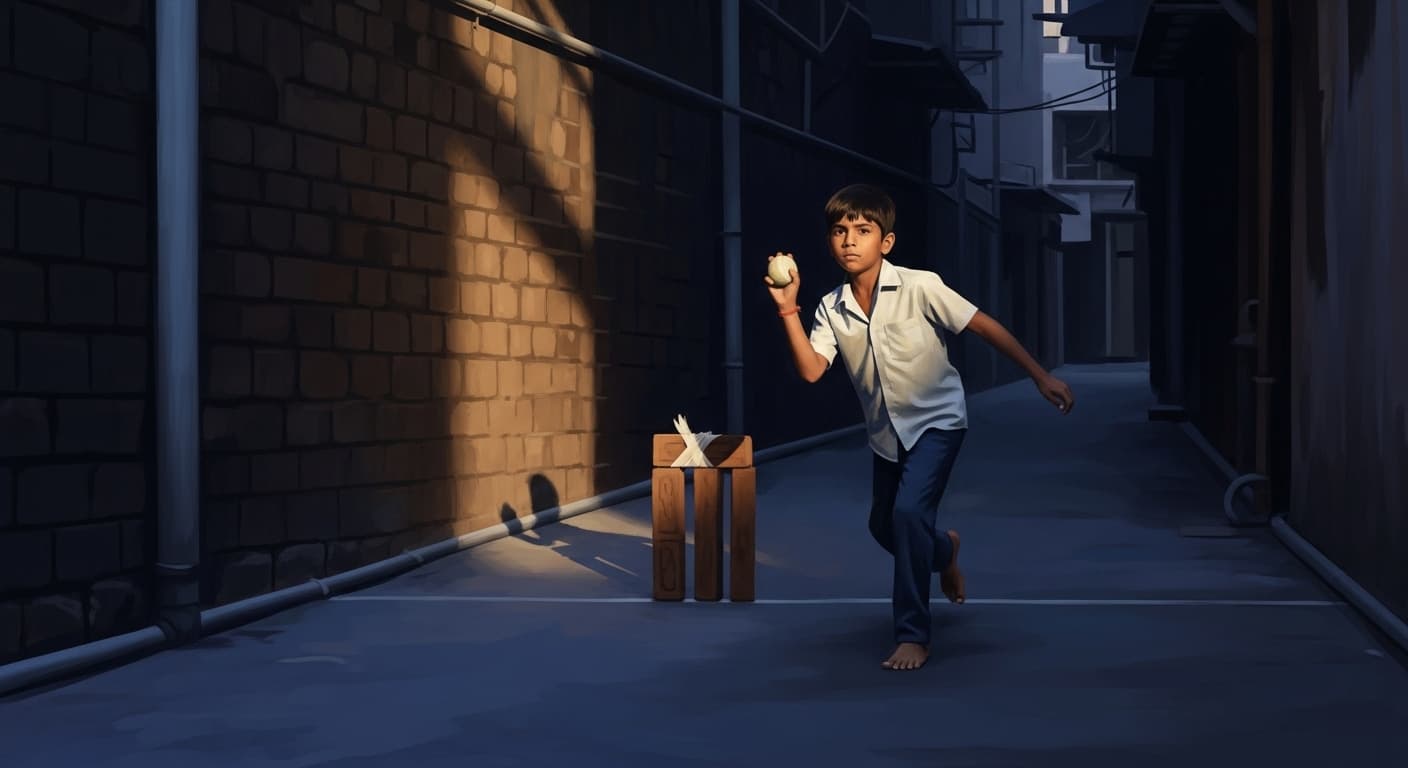
There is a boy this morning in a Mumbai gully, bowling a taped tennis ball at three bricks against a wall. He has not yet been told who he is supposed to hate. The sport began with him.
We can give it back to him.